
Home services
Social Media Marketing for Home Services: How Local Pros Win Jobs With Content
21 October 2026 · 12 min read · By Orion Media Group
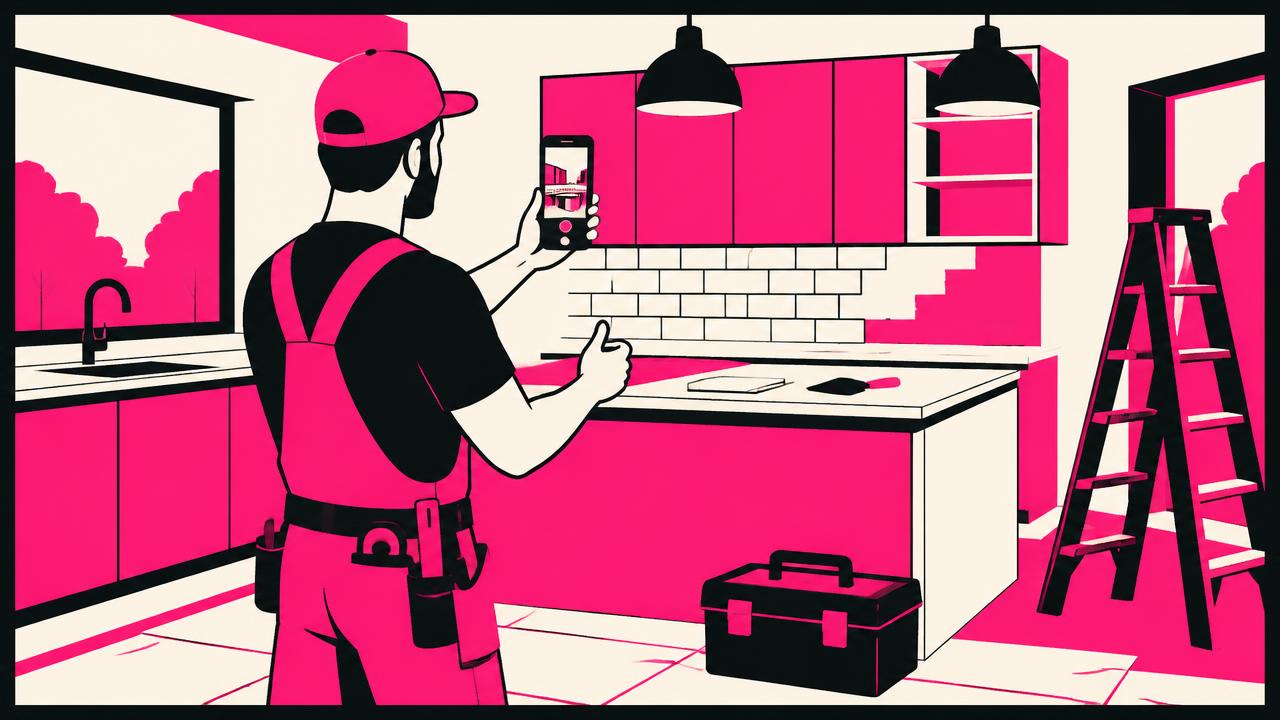
Home services is a trust business. Nobody lets a stranger into their house — to fix a pipe, clean a kitchen, care for a parent or rewire a fuse box — without first deciding that person is competent, honest and safe. Twenty years ago that trust came from a neighbor's recommendation. Today it increasingly comes from a feed: the homeowner scrolls, watches a few videos, reads a few comments, and forms a judgment before they ever call.
That shift is an enormous opportunity for local operators, because most of your competitors still treat social media as an afterthought — a blurry before-and-after photo posted twice a year. The businesses winning local work from social are doing something simple but consistent: showing the work, explaining the work, and letting the person behind the business be visible. This guide is the system we build for home services clients, and it works whether you are a one-van operation or a multi-crew company.
Why trust content beats promotional content in home services
The buying decision in home services is driven by risk reduction, not price comparison. A homeowner choosing between three quotes is really asking: who will show up on time, do the job properly, treat my home with respect and not invent extra charges? Content that answers those unspoken questions converts; content that shouts about discounts does not.
This is why the highest-performing home services accounts look more like documentation than advertising. A video of a technician explaining why a water heater failed, shot on a phone at the actual job, outperforms a polished promo reel almost every time — because it demonstrates competence in a way that cannot be faked. The audience can tell the difference between a company that does the work and a company that markets the work.
The practical rule: for every one promotional post (an offer, a seasonal special, a hiring announcement), publish at least four pieces of proof — real jobs, real explanations, real people. The promotional posts only work because the proof posts made the audience trust you first.
- Show the work being done, not just the finished result.
- Explain the why — diagnosis, options, trade-offs — in plain language.
- Put faces on camera; homeowners hire people, not logos.
- Keep promotional content under a fifth of what you publish.
In home services, the feed is the new reference check. Homeowners are vetting you before they ever pick up the phone.
Book a callThe five content types that actually book jobs
After running content systems for local service businesses, five formats consistently outperform everything else. First, the before-and-after reveal — the single most reliable format in the category, because it is visual proof of transformation. Second, the diagnostic explainer: "here is why your drain keeps clogging" or "three signs your furnace is about to fail" — content that makes the viewer feel smarter and positions you as the honest expert.
Third, the day-in-the-life or ride-along video, which humanizes the crew and answers the safety question every homeowner has about letting strangers inside. Fourth, the mistake callout — what cheap contractors get wrong, what to ask before hiring, what a fair price actually includes. This format builds trust precisely because it is willing to criticize the industry you belong to.
Fifth, the customer story: a real client, a real problem, a real resolution, told with permission. Not a scripted testimonial read to camera — an actual story with specifics. Specificity is what makes it believable, and believability is the entire game.
- Before-and-after reveals — the category's most reliable format.
- Diagnostic explainers that make viewers feel smarter.
- Ride-along and crew content that answers the safety question.
- Mistake callouts — what to ask before hiring anyone, including you.
- Specific customer stories, told with permission.
Local reach: how the algorithm actually works for service areas
Home services businesses do not need a national audience — they need the right few thousand people within a service radius. The good news is that short-form platforms have become remarkably good at local distribution: TikTok, Instagram Reels and YouTube Shorts all weight viewer location heavily, and content tagged with a city or region in the caption, on-screen text and hashtags gets disproportionately shown to people nearby.
The tactics that matter: name your city and neighborhoods out loud in videos and in captions, because the platforms transcribe audio and read on-screen text. Post content about locally specific problems — the hard water in your county, the housing stock in your town, the weather pattern that kills roofs in your region. Local specificity is both a relevance signal to the algorithm and a trust signal to the viewer, who immediately recognizes that you actually work here.
Google Business Profile deserves the same discipline as the social feeds. Short videos and job photos posted there surface directly in local search and Maps results, which is where the highest-intent homeowners actually are. A home services business with an active, review-rich profile and a steady stream of job documentation will out-rank a bigger competitor with a stale one.
- Say your city and service area out loud — platforms transcribe audio.
- Make content about locally specific problems, not generic advice.
- Treat Google Business Profile as a social channel, not a listing.
- Ask every happy customer for a review while the job is fresh.
A worked example: trust-first content in home care
A useful reference point is USA Home Aid, a home services company that has built its presence around exactly the trust-first principles above. Rather than leading with promotions, the site and content lead with what homeowners actually worry about: who is coming into the home, what the work involves, and what it will cost — answered plainly, before any sales ask.
That ordering is the whole lesson. In a category where the customer is inviting someone into their private space — often for vulnerable family members — the business that reduces anxiety fastest wins the job. Clear service explanations, visible standards and straight answers about pricing do more selling than any ad campaign, because they address the real objection, which is fear, not budget.
The template transfers to any home services vertical: identify the three anxieties your customers have before hiring (safety, competence, cost), then build content that resolves each one repeatedly, in different formats, until your feed reads like a portfolio of reassurance. That is what converts a scroller into a booked job.
- Lead with the customer's anxieties, not your offer.
- Answer who, what and how much before asking for anything.
- Repeat the reassurance in different formats — trust compounds.
Turning followers into booked jobs
Reach without a conversion path is vanity. Every piece of home services content should end with one clear, low-friction next step: a call, a quote form, a DM keyword, or a booking link in bio. The mistake most operators make is either having no call-to-action at all, or having five. One action, repeated consistently, trains the audience on how to hire you.
Response speed is the hidden conversion lever. In local services, the first business to respond to an inquiry wins the job the majority of the time — homeowners messaging three companies typically book whichever answers first with something useful. If social DMs are part of your funnel, someone needs to own them with the same urgency as the phone line.
Finally, measure what predicts revenue, not what flatters you. Track quote requests, calls and booked jobs by channel — not follower counts. A home services account with 2,000 local followers and a disciplined conversion path will out-earn one with 50,000 followers scattered across the country every single month.
- Short-form video editing for service businesses
- How much does video editing cost?
- Start a project with Media Strategy Lab
If you want a content system that books jobs instead of just collecting views, that's exactly what we build — get in touch and we'll map it to your service area.
Book a callFrequently asked questions
- Which social platform works best for home services businesses?
- Facebook and Instagram remain the strongest for local reach and community groups, TikTok and YouTube Shorts are best for discovery and demonstrating expertise, and Google Business Profile is essential because it sits directly in local search results. Most home services businesses do best with one primary short-form platform plus an actively maintained Google profile.
- How often should a home services company post on social media?
- Three to four posts per week is the sustainable sweet spot for most operators. Consistency matters far more than volume — a steady rhythm of real job documentation beats a burst of ten posts followed by two silent months.
- Do before-and-after videos really work for contractors and cleaners?
- Yes — before-and-after content is the most reliable format in the category because it is visual proof of transformation. The key is showing the process, not just the result: a 30-second clip of the work in progress builds more trust than a static pair of photos.
- Should home services businesses run ads or rely on organic content?
- Start with organic content to build the trust library, then use paid ads to amplify the best-performing proof content to your service area. Ads pointing at a thin, promotional profile waste money; ads pointing at a feed full of real work convert.
- How do I get my crew comfortable on camera?
- Start with voiceover and hands-only footage — the work itself is the star, not the presenter. Most technicians warm up within a few weeks once they see that simple, honest explanations outperform polished performances.
- Can a small one-person operation compete with big franchises on social media?
- Yes, and often easily. Local algorithms favor relevance and engagement over budget, and a visible owner doing real work is more trustworthy than a franchise's stock content. Specificity and consistency beat production budget in this category.